

Bathroom Remodeling in the East Bay
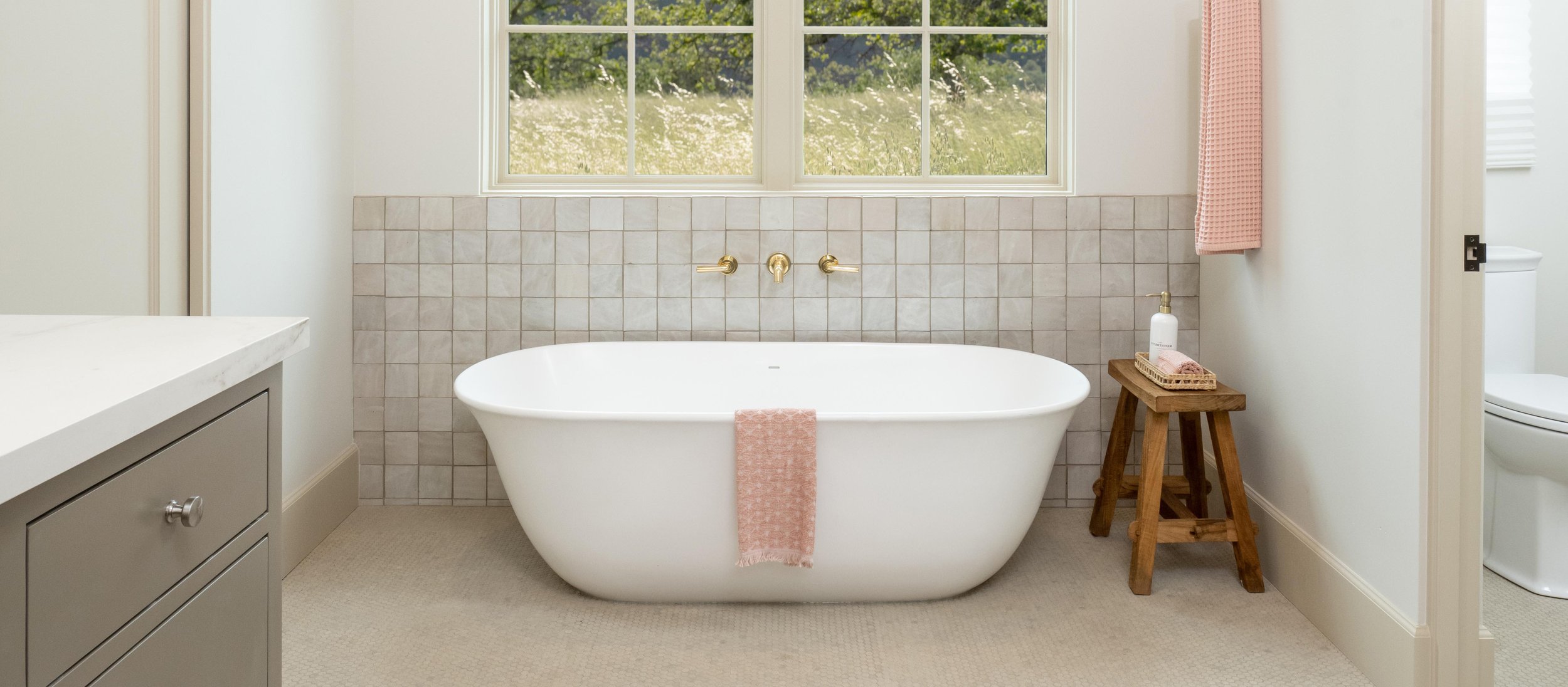

Bathrooms may be some of the smallest rooms in the house, but they're also some of the most complicated to remodel.
A bathroom has to fit plumbing, storage, lighting, ventilation, tile, cabinetry, fixtures and everyday routines into a relatively small footprint. And when the layout isn't working, simply replacing the finishes won't necessarily make the room function any better.
Maybe your primary bathroom has a huge tub you never use but a shower that's too small. Maybe your kids are sharing a hall bathroom without enough storage. Maybe the vanity is too small, the toilet is in an awkward location, or you're wondering whether there is a way to make the entire room feel larger.
Before selecting tile and plumbing fixtures, it makes sense to start with the bigger question: Is the existing layout actually the best use of the space?
What Does a Full Bathroom Remodel Include?
A full bathroom remodel typically means taking the room down to the studs and rebuilding it rather than simply replacing finishes.
Depending on the bathroom and what you're trying to change, the project may include:
Reconfiguring the bathroom layout
Relocating plumbing fixtures
Enlarging or relocating the shower
Removing an unused bathtub
Adding or relocating a freestanding tub
Creating a separate toilet room
Replacing a single vanity with a double vanity
Adding custom cabinetry or linen storage
Replacing or enlarging a window
Updating lighting and electrical
Adding or improving ventilation
New flooring and shower tile
New plumbing fixtures
Custom shower glass
Medicine cabinets, mirrors and lighting
Updating older plumbing, electrical or other systems uncovered during construction
The right scope depends on the room you're starting with and what isn't working about it now.
Should You Change the Bathroom Layout?
Not every bathroom needs to be completely reconfigured.
If the existing layout works well, keeping the plumbing fixtures in roughly the same locations can simplify construction and reduce cost. You can still completely transform the room with new cabinetry, tile, plumbing fixtures, lighting and finishes.
But if the layout is the problem, it is worth exploring what else is possible before committing to the existing footprint.
Sometimes relocating a toilet creates room for a larger shower. Removing an oversized tub can free up valuable floor space. Changing the vanity configuration can add significantly more storage. In a primary suite, it may even make sense to look at the bathroom and closet together rather than treating them as two separate spaces.
You're already investing substantially in the room. The goal should be to solve the problems that made you want to remodel it in the first place.
Primary, Hall and Powder Bathrooms Have Different Needs
Not every bathroom needs the same level of investment or the same design approach.
Primary Bathrooms
Primary bathrooms usually have the most opportunities for layout changes. A remodel may include a larger shower, freestanding tub, double vanity, custom cabinetry, private toilet area, improved lighting and more storage.
This is also where it can make sense to rethink the relationship between the bathroom and primary closet if the existing layout isn't using the available square footage well.
Hall and Kids' Bathrooms
For a shared bathroom, function matters just as much as finishes.
A double vanity may make mornings easier, while better drawer storage, medicine cabinets, durable materials and a tub/shower configuration can make the room work better for kids now without feeling juvenile as they get older.
Powder Bathrooms
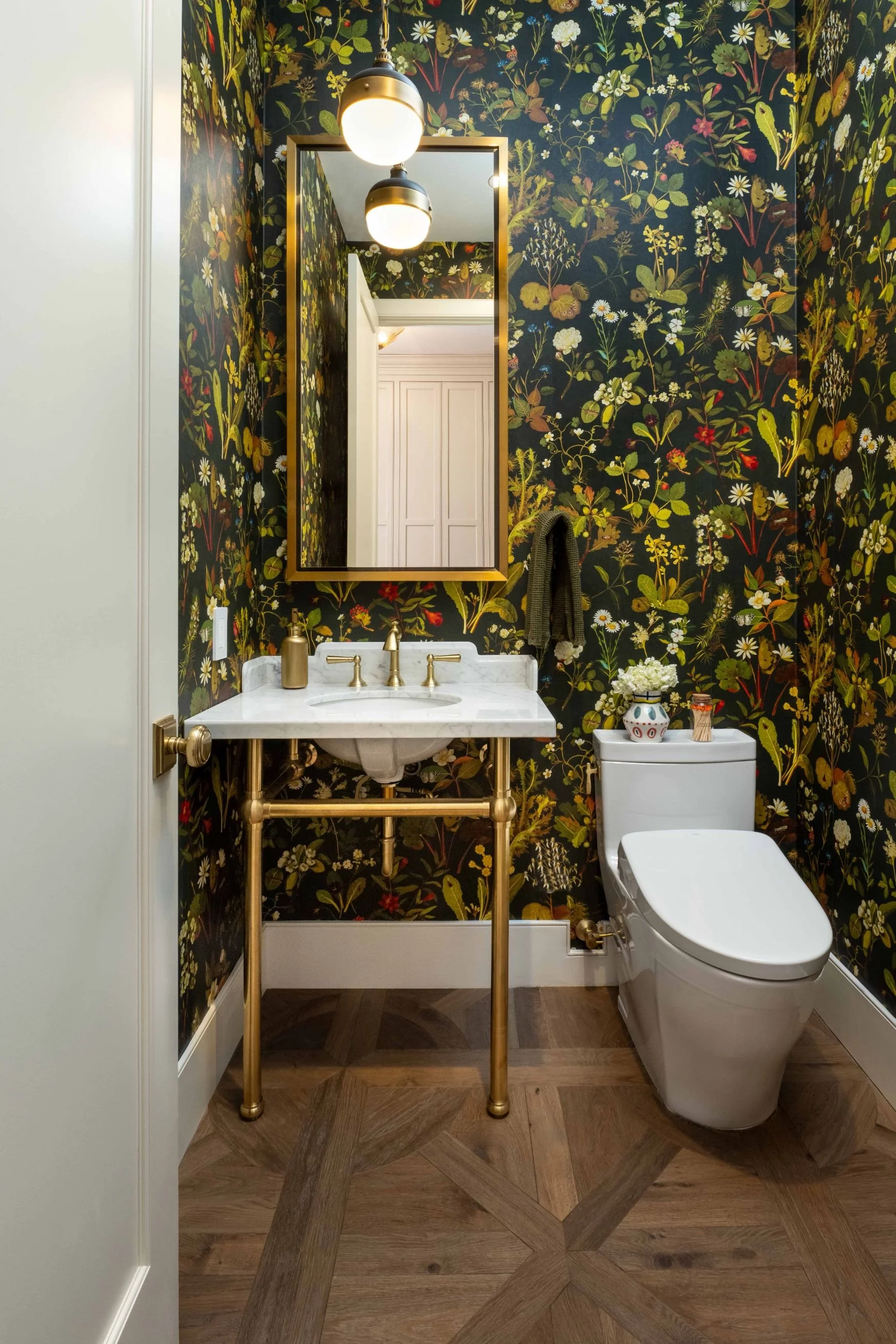
Powder rooms are small enough that you can often have a little more fun with the design.
Because there isn't a shower or tub, there are fewer wet-area materials to coordinate. Wallpaper, paneling, a statement vanity, decorative lighting or a more interesting tile can give a small room personality without having to carry those choices throughout a larger bathroom.
What to Consider When Remodeling an East Bay Bathroom
Many Lafayette, Moraga, Orinda, Walnut Creek, Danville and Alamo homes were built decades ago. Once an older bathroom is opened up, there may be conditions behind the walls that need to be addressed along with the new design.
Moving plumbing can affect cost.
Moving a sink a few feet isn't necessarily the same as relocating a toilet or moving plumbing through a concrete slab. The existing construction of your home matters when deciding how much of the layout should change.
Waterproofing matters as much as tile.
The part of the shower you can't see is just as important as the tile you choose. A bathroom remodel needs properly designed waterproofing, drainage and ventilation to perform well long after construction is finished.
Older electrical and plumbing may need updating.
Once walls are open, older supply lines, drain lines, wiring, outlets or ventilation may need to be brought up to current requirements.
Small measurements make a big difference.
Vanity depth, shower dimensions, door swings, toilet clearances, plumbing locations, lighting placement and even where a towel bar goes can affect how comfortable the finished bathroom feels.
Bathrooms don't leave much room for error, which is why the layout and details should be worked through before construction begins.
A Real Primary Bathroom Remodel in Lafayette, CA
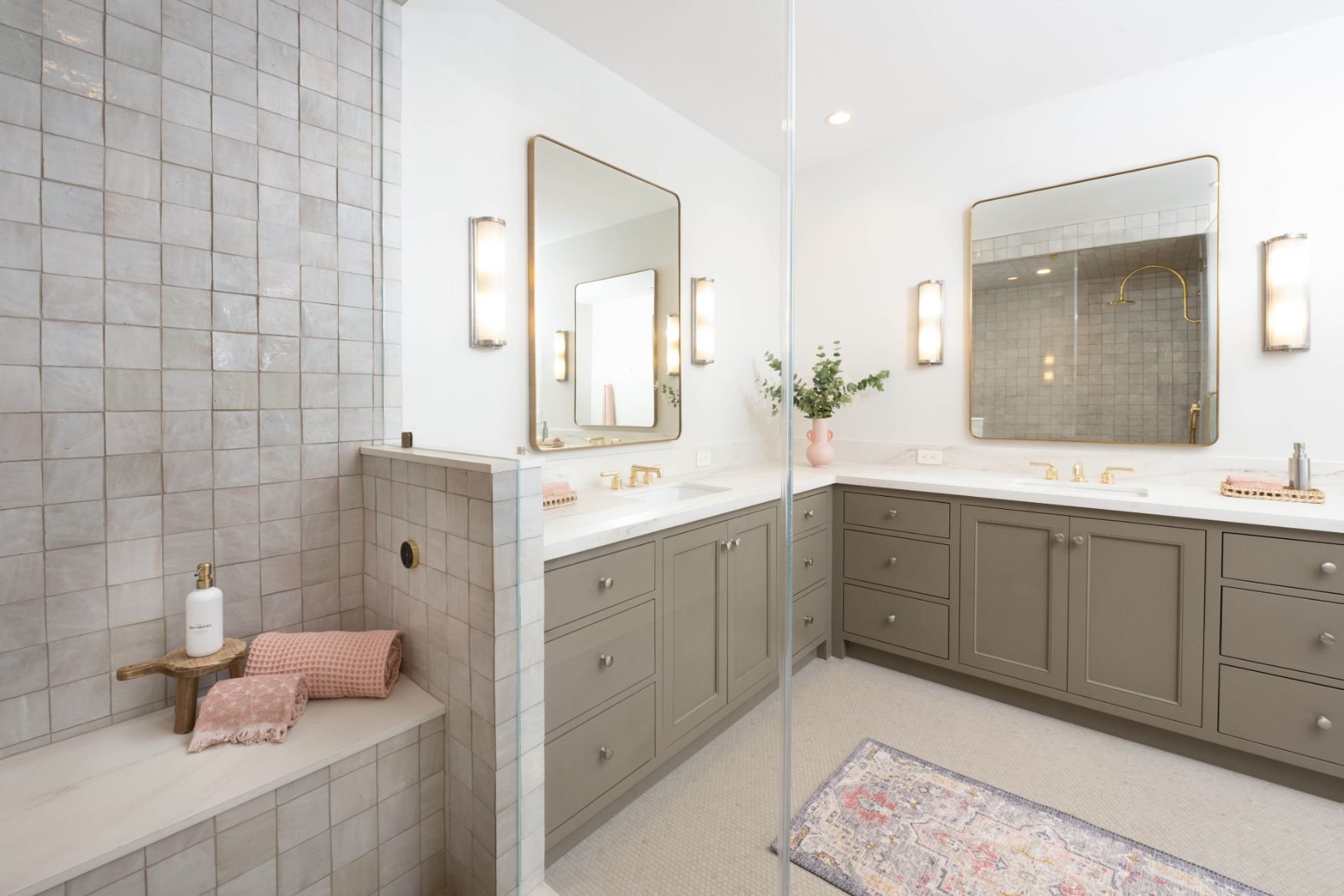
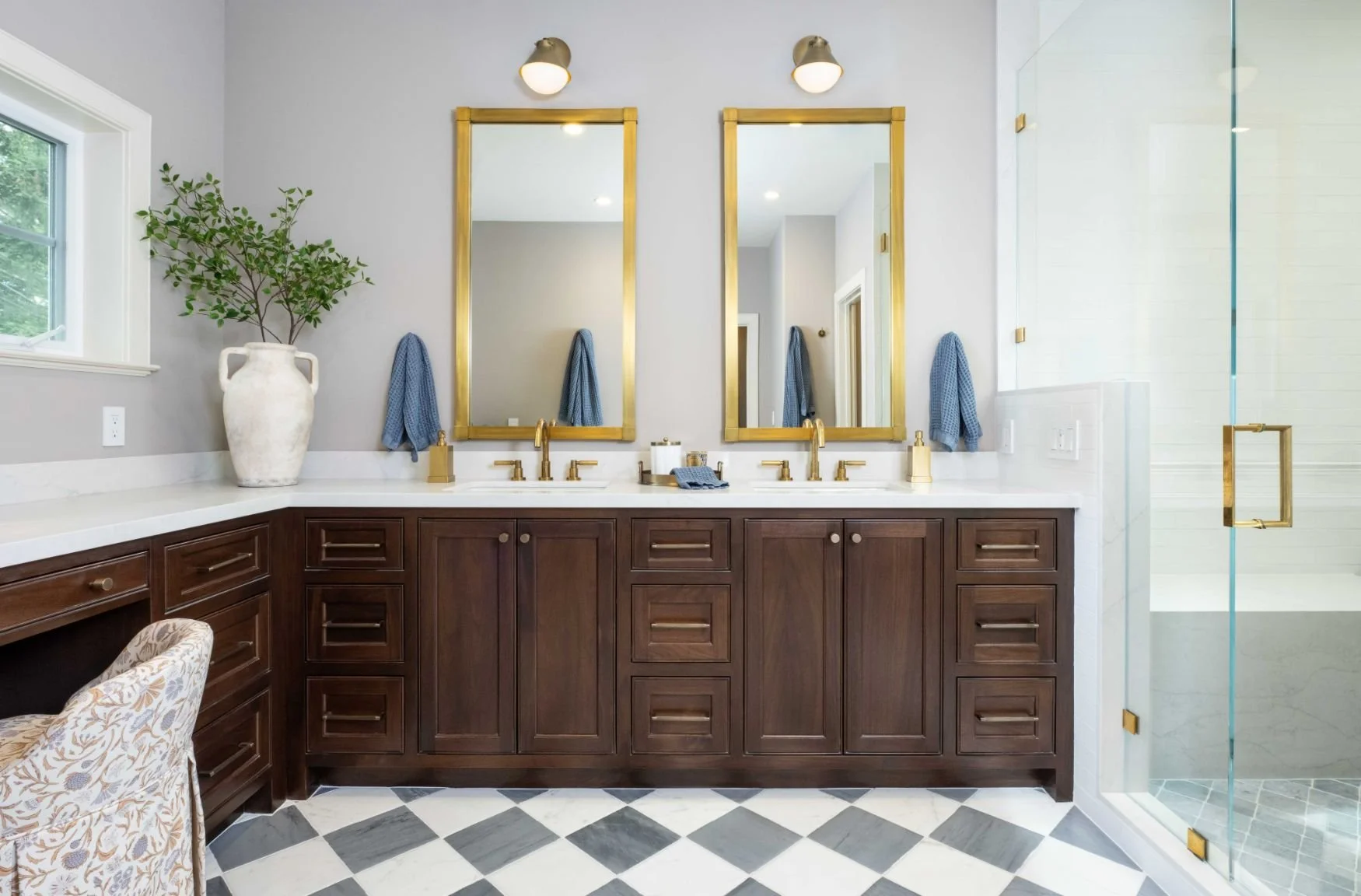
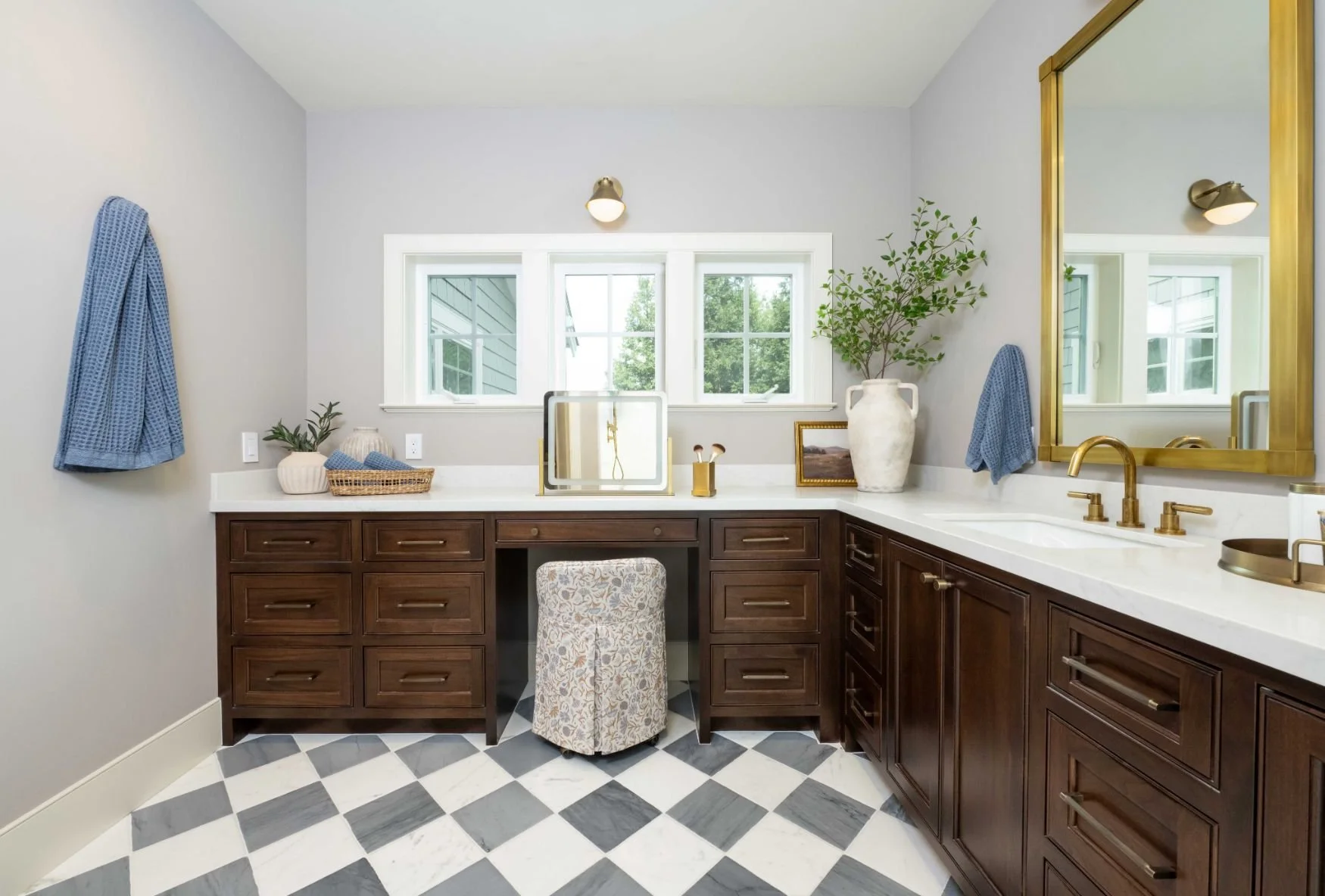
This 2000s Lafayette primary bathroom had plenty of square footage, but much of it was poorly organized and underused. The layout didn't give the homeowners the function or storage they wanted, despite the size of the room.
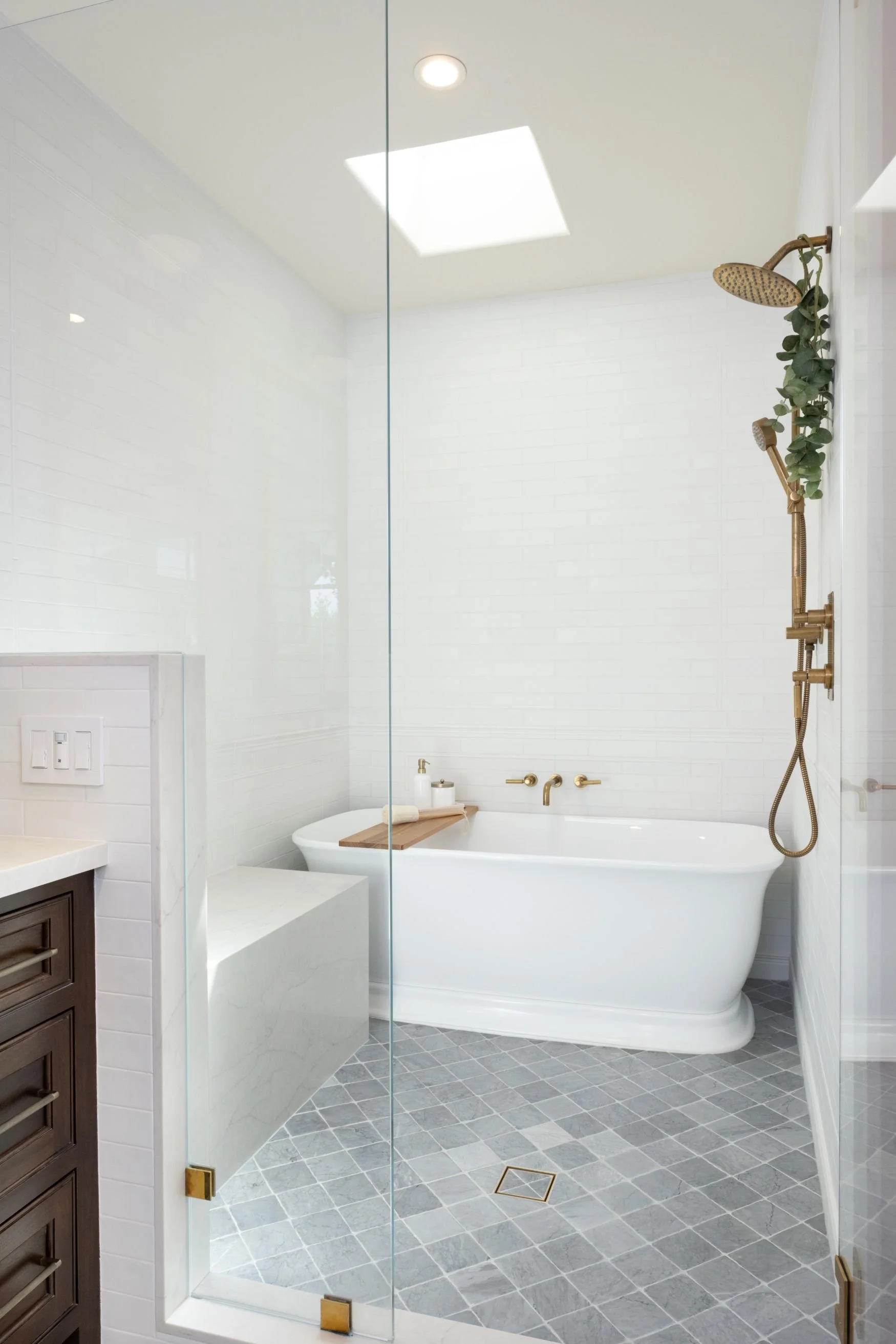
They wanted to rework the space to create a large walk-in wet room with both a shower and tub, an L-shaped vanity with two sinks and a dedicated makeup area, significantly more storage, and a separate water closet for privacy. Just as importantly, they wanted to completely change the style of the bathroom so it felt more like them.
The Results
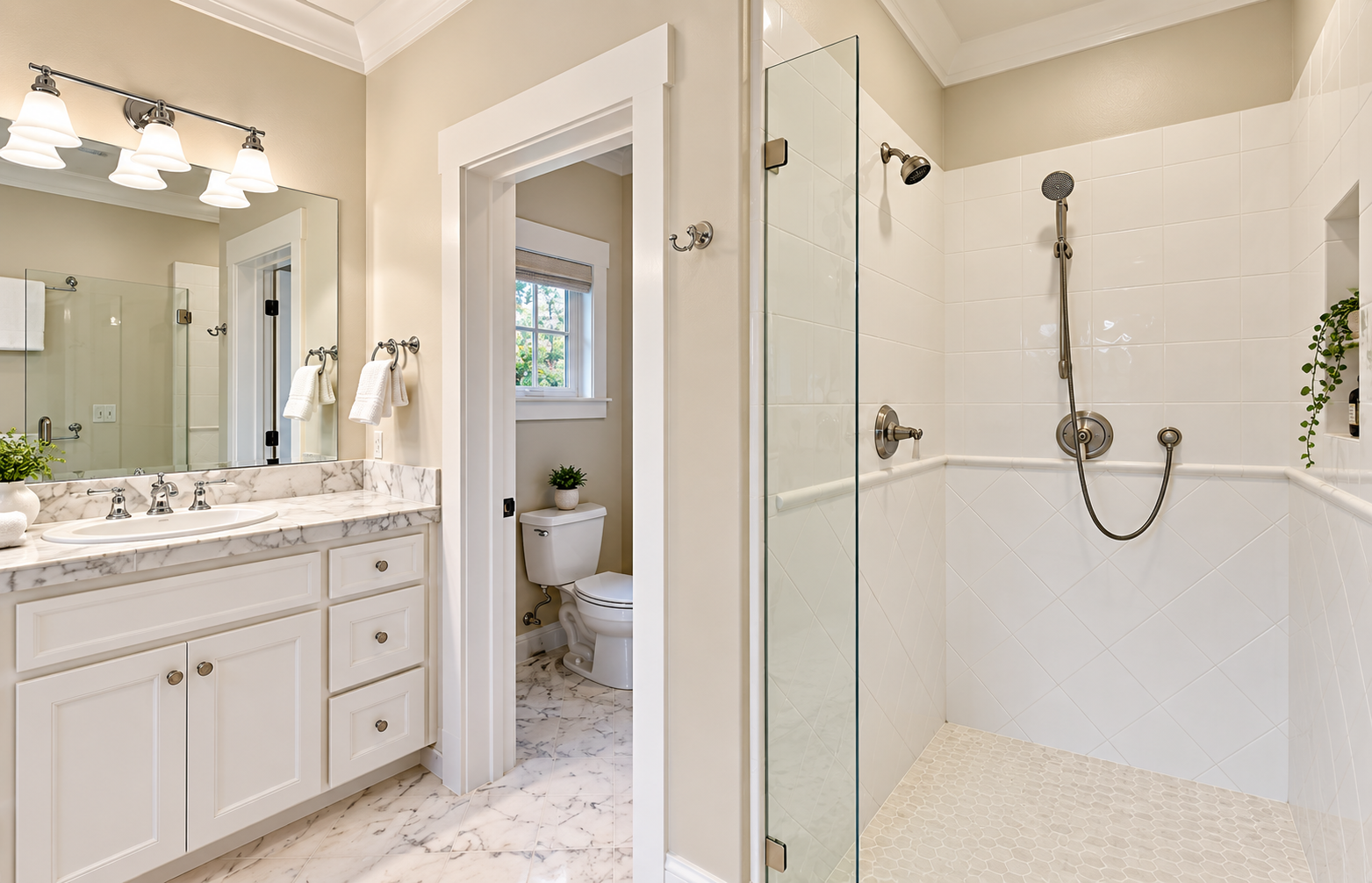
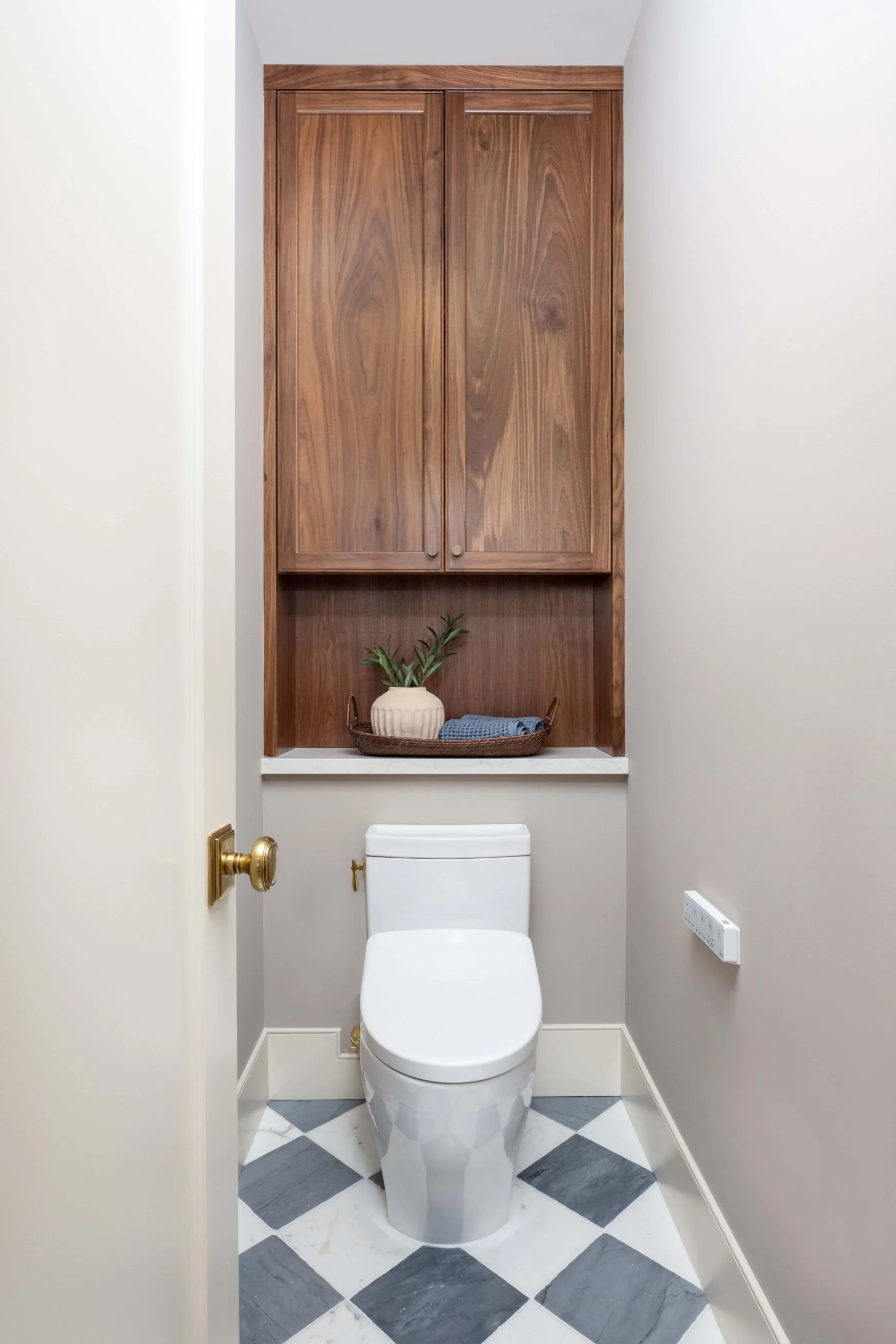
We completely reorganized the layout to make better use of the existing square footage. By relocating the water closet and shower, we created a large walk-in wet room with an oversized freestanding tub, built-in shower bench, and multiple shower heads. The new L-shaped vanity wraps around the room with two sinks, a dedicated makeup area, and significantly more storage. We even used the space behind the toilet for additional built-in storage. The result is a bathroom that feels larger, functions better, and finally reflects the homeowners' style.
TestimonialHaving a designer who really understood our needs made our family’s vision become reality. Gita was an amazing project manager and sounding board throughout the process, helping us work through ideas while keeping everything on track. Weekly meetings with Gita and Priyam were not only practical, but fun, and allowed us to make real-time adjustments as we watched the project come to life. We couldn’t be more pleased with our beautiful home!
Alanna K. / Lafayette, Ca.
How Much Does a Bathroom Remodel Cost?
Bathroom remodeling costs vary considerably depending on the type of bathroom, whether the layout is changing, the level of finish, and the existing conditions of the home.
A powder room with a vanity and toilet is a very different project from a primary bathroom with a custom double vanity, large shower, freestanding tub, extensive tile and relocated plumbing.
The total project cost can include more than the visible finishes. Design, permit plans, permits, plumbing and electrical work, waterproofing, construction labor and materials, cabinetry, tile, plumbing fixtures, shower glass, lighting and project management all contribute to the final investment.
For detailed pricing, we've created local bathroom remodeling cost guides based on the types of projects we see throughout the East Bay.
Bathroom Remodeling Costs by City
Bathroom Remodel Cost in Lafayette
Bathroom Remodel Cost in Moraga
Bathroom Remodel Cost in Orinda
Bathroom Remodel Cost in Walnut Creek
Bathroom Remodel Cost in Danville
Bathroom Remodel Cost in Alamo
Bathroom Remodeling FAQs
Do I need a permit to remodel my bathroom?
Most full bathroom remodels require permits when plumbing, electrical, mechanical, structural elements, or windows are being changed. The exact requirements depend on the scope of the project and the jurisdiction where your home is located.
Is it expensive to move plumbing in a bathroom?
It depends on what is moving and how your house is constructed.
Moving a sink can be relatively straightforward in some situations, while relocating a toilet, shower drain, or plumbing within a concrete slab can require considerably more work. The existing plumbing and structure should be evaluated before finalizing a new layout.
Should I keep a bathtub in my primary bathroom?
Not necessarily. If you rarely use the tub and would rather have a larger shower, better storage, or more open space, removing it may make sense. If your home has another bathtub—particularly in a hall or kids' bathroom—you may decide a tub isn't necessary in the primary bathroom.
The decision should be based on how you actually use the space rather than assuming every primary bathroom needs a tub.
Is it better to remodel multiple bathrooms at the same time?
If you know you want to remodel multiple bathrooms, it can be more cost-effective to do them as part of the same project rather than one at a time.
Many of the trades can complete work in multiple bathrooms during the same visit instead of returning for separate projects. You can also save on plans and permitting. Multiple bathrooms can typically be included on one set of plans and submitted under one permit, rather than paying for separate plans and permits each time you remodel another bathroom.
The other big consideration is time. A full bathroom remodel typically takes about 8–12 weeks of construction. If you remodel three bathrooms one after another, you could spend six months or more—and potentially close to a year—living through separate construction projects. Remodeling them together allows much of that work to happen concurrently and significantly reduces the total amount of time your home is under construction.
The bathrooms don't need to look the same, either. Materials can be repeated where it makes sense while still giving each bathroom its own design.
The biggest consideration is how to sequence the work so your family still has access to a functioning bathroom during construction.
What does it take to add a new bathroom?
Adding a new bathroom is more involved than remodeling an existing one because plumbing, drainage, ventilation, and electrical need to be brought to a space that wasn't originally designed as a bathroom.
The location of the new bathroom can have a significant impact on cost and complexity. A bathroom located near existing plumbing is generally easier to add than one on the opposite side of the house or in an area where accessing the drain lines is difficult.
Your contractor should also verify whether the home's existing sewer line can accommodate the additional bathroom. Depending on the existing system and the fixtures being added, the sewer line may need to be upgraded as part of the project.
The project may also involve framing, structural work, new windows, waterproofing, and permitting before you get to the cabinetry, tile, fixtures, and finishes.
How long does a bathroom remodel take?
For a full bathroom renovation with permits, plan on approximately 8–12 weeks of construction, depending on the size of the bathroom, complexity of the layout, and scope of work.
A bathroom that keeps its existing layout may move more quicker than a primary bathroom with relocated plumbing, custom cabinetry, extensive tile, or structural changes.
The construction timeline does not include the design, material selection, and permitting work that happens before construction begins.
Ready to Rethink your Bathroom?
If your bathroom isn't making the best use of the space you already have, let's look at the layout first and figure out what actually needs to change.
Serving Homeowners in
Lafayette | Moraga | Orinda | Walnut Creek | Danville | Alamo